Project details
Budget:
$2500
Client:
Sojo News
Tool:
Figma
News Aggregation Web & App
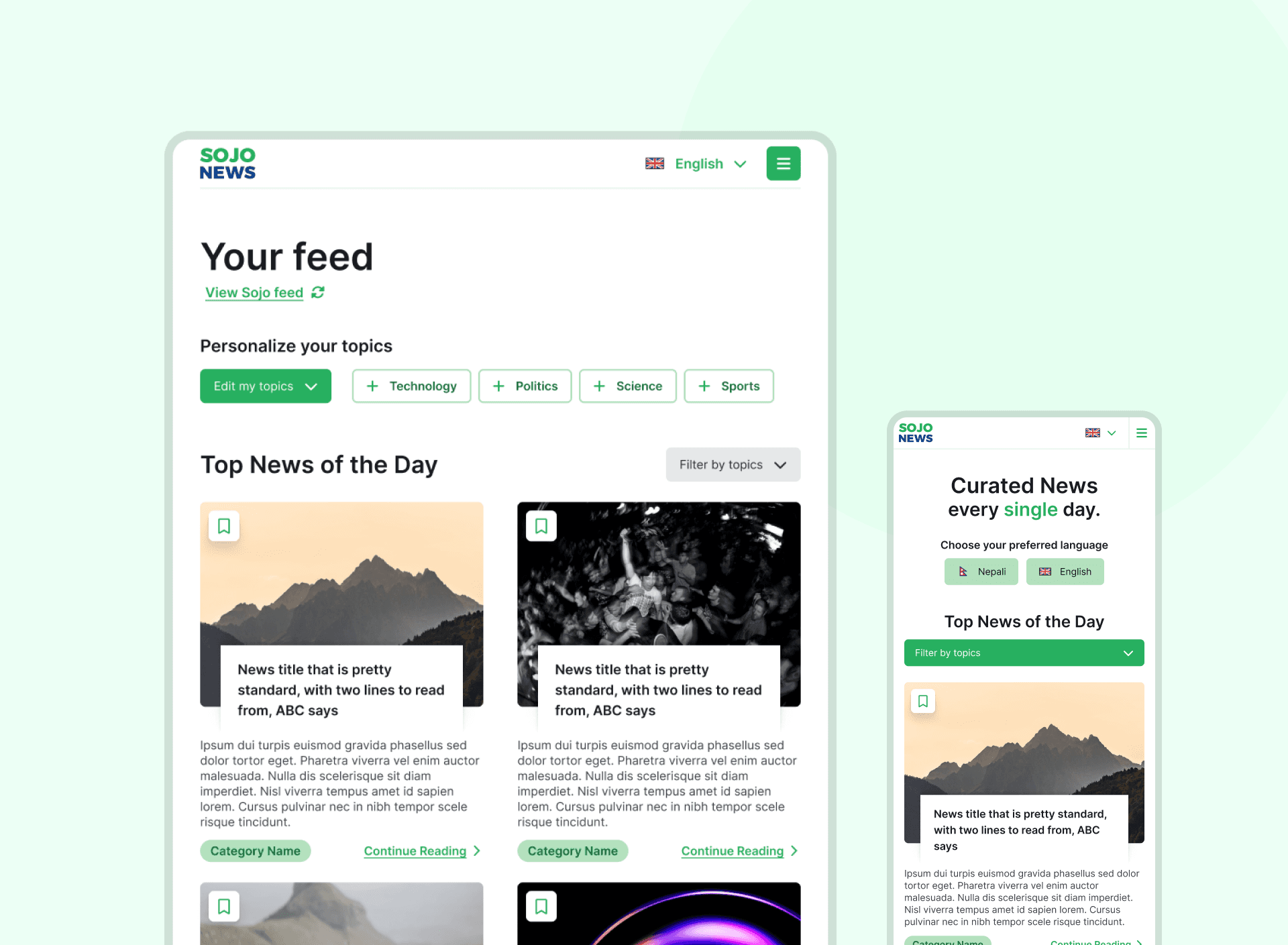
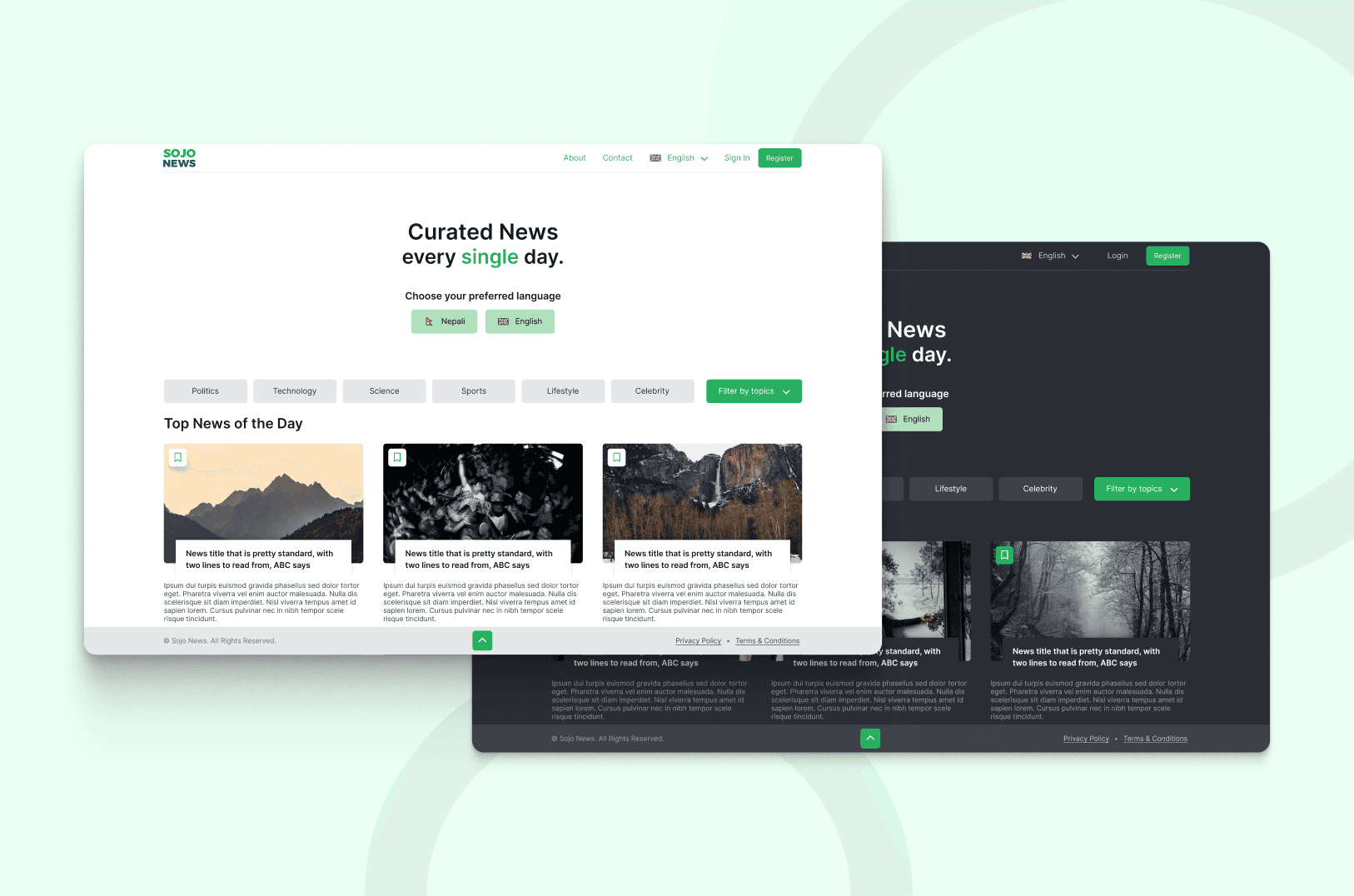
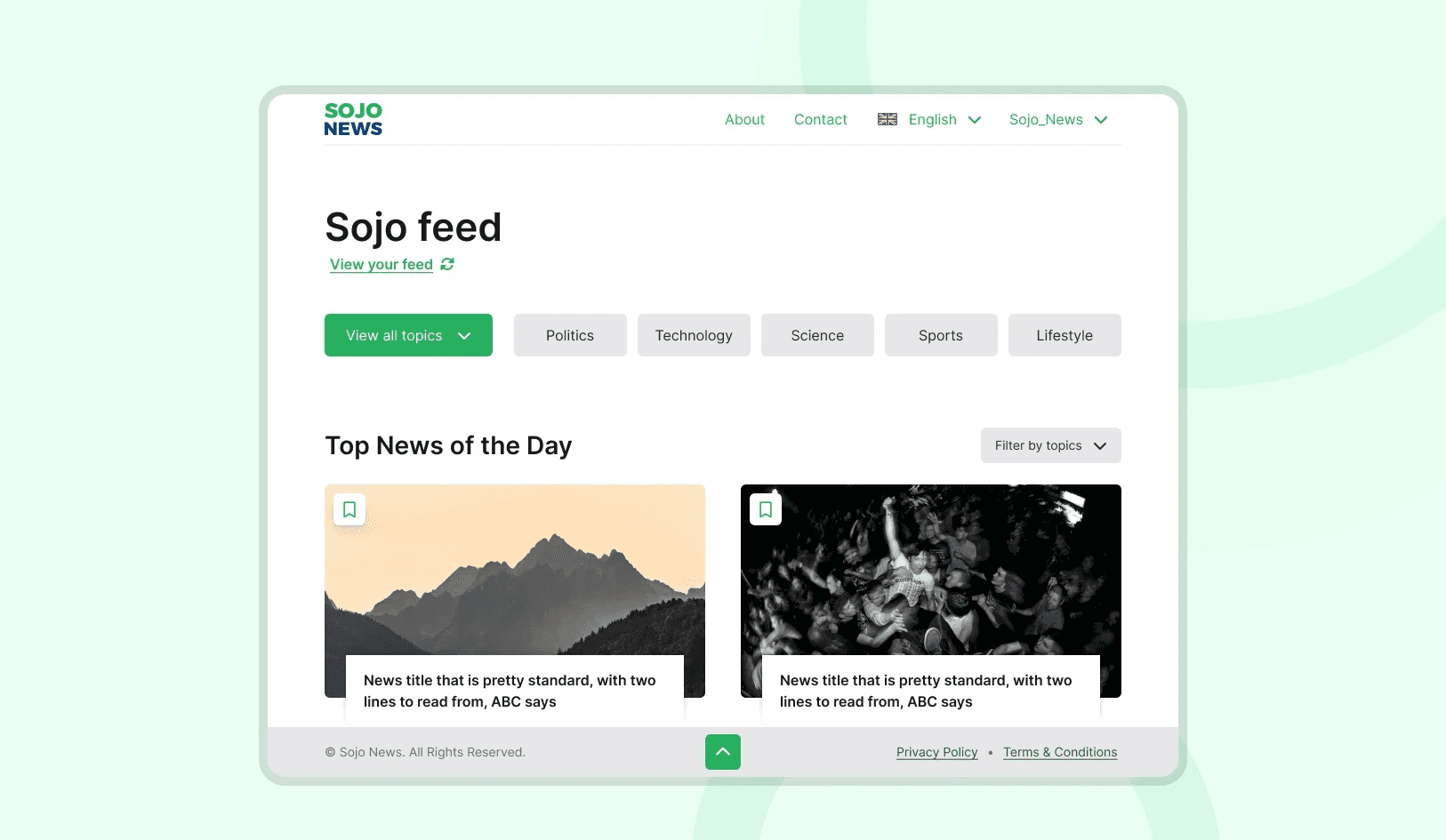
Sojo News is a mobile app and webapp designed to combat misinformation, sensationalism, and irrelevant content in news consumption. Its core feature allows users to customize their news feed using robust filters, ensuring they see only authentic, short-form news aligned with their interests. The app addresses the growing frustration with TRP-driven content, violent news, and celebrity gossip cluttering traditional news platforms.
1. Empathize & Define: Understanding the Problem
With the rise of information overload and declining trust in news platforms, the Sojo News app was designed to help users regain control over their news consumption.
We began with user research, targeting professionals and students. The focus was on uncovering emotional stress caused by violent or irrelevant content, frustration with cluttered feeds, and a lack of trust in sensationalized news.
Through empathy maps and persona development, we gained clear insights into what users were thinking, feeling, and doing. These findings helped us define the core problem: “How might we empower users to personalize their news experience and regain trust in their feed?”
1. Empathize & Define: Understanding the Problem
With the rise of information overload and declining trust in news platforms, the Sojo News app was designed to help users regain control over their news consumption.
We began with user research, targeting professionals and students. The focus was on uncovering emotional stress caused by violent or irrelevant content, frustration with cluttered feeds, and a lack of trust in sensationalized news.
Through empathy maps and persona development, we gained clear insights into what users were thinking, feeling, and doing. These findings helped us define the core problem: “How might we empower users to personalize their news experience and regain trust in their feed?”
1. Empathize & Define: Understanding the Problem
With the rise of information overload and declining trust in news platforms, the Sojo News app was designed to help users regain control over their news consumption.
We began with user research, targeting professionals and students. The focus was on uncovering emotional stress caused by violent or irrelevant content, frustration with cluttered feeds, and a lack of trust in sensationalized news.
Through empathy maps and persona development, we gained clear insights into what users were thinking, feeling, and doing. These findings helped us define the core problem: “How might we empower users to personalize their news experience and regain trust in their feed?”
After defining the core problem through user research, we moved into ideation with a clear goal: empower users to take control of their news feed while rebuilding trust in the content they consume.
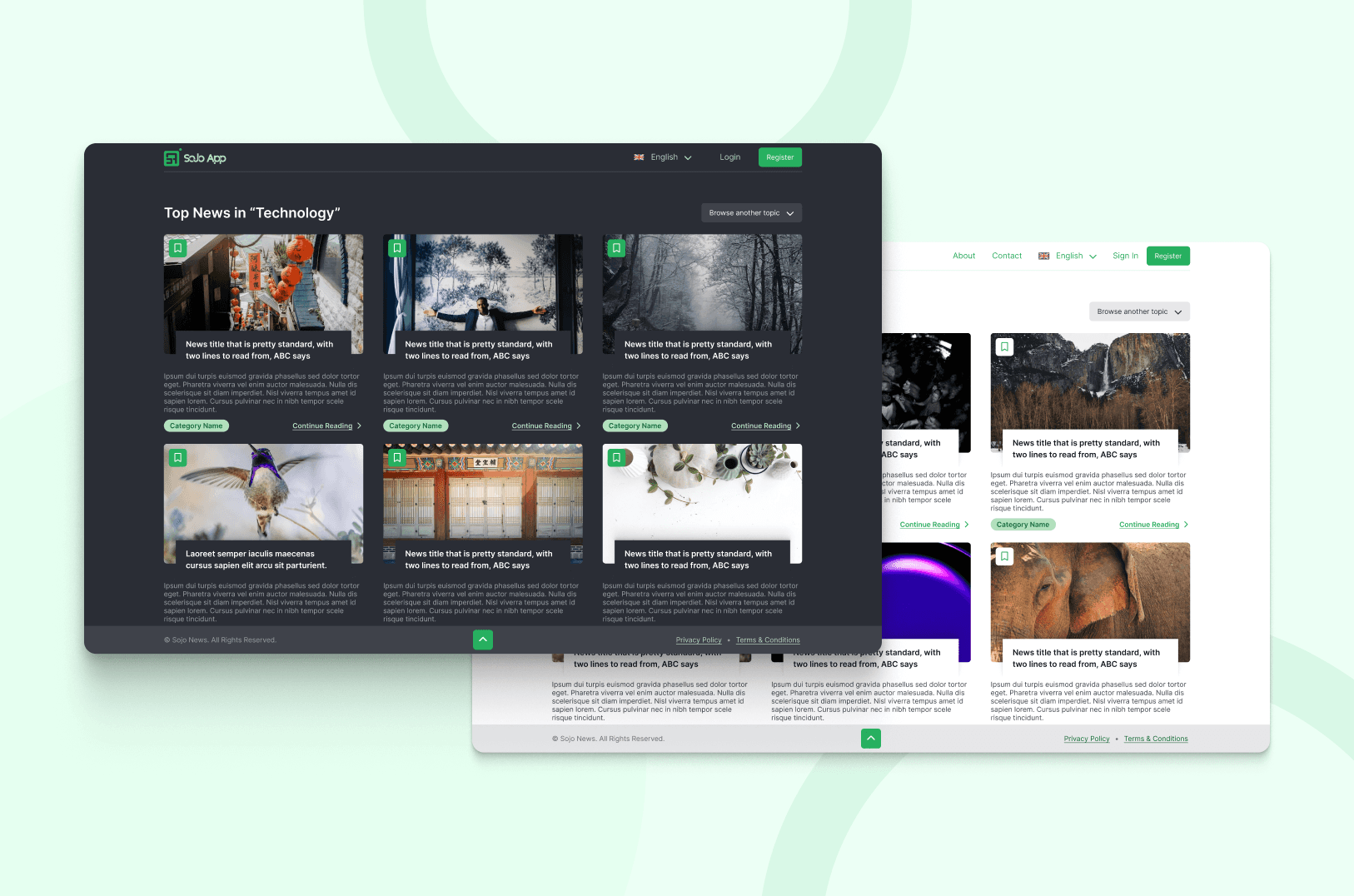
We explored multiple ideas—filter systems, credibility indicators, and a mood-based experience—guided by real user insights and gaps identified in competing platforms. From there, we rapidly prototyped key flows and tested them with target users.
User feedback shaped our final design decisions. Custom filters improved personalization, credibility badges built trust, and short-form updates reduced overwhelm. While respecting the project's confidentiality, I can share that the final solution was well-received—validating our user-centered direction and laying the foundation for future refinement.
After defining the core problem through user research, we moved into ideation with a clear goal: empower users to take control of their news feed while rebuilding trust in the content they consume.
We explored multiple ideas—filter systems, credibility indicators, and a mood-based experience—guided by real user insights and gaps identified in competing platforms. From there, we rapidly prototyped key flows and tested them with target users.
User feedback shaped our final design decisions. Custom filters improved personalization, credibility badges built trust, and short-form updates reduced overwhelm. While respecting the project's confidentiality, I can share that the final solution was well-received—validating our user-centered direction and laying the foundation for future refinement.
After defining the core problem through user research, we moved into ideation with a clear goal: empower users to take control of their news feed while rebuilding trust in the content they consume.
We explored multiple ideas—filter systems, credibility indicators, and a mood-based experience—guided by real user insights and gaps identified in competing platforms. From there, we rapidly prototyped key flows and tested them with target users.
User feedback shaped our final design decisions. Custom filters improved personalization, credibility badges built trust, and short-form updates reduced overwhelm. While respecting the project's confidentiality, I can share that the final solution was well-received—validating our user-centered direction and laying the foundation for future refinement.